
The Guide on the Side, Not the Sage on the Stage
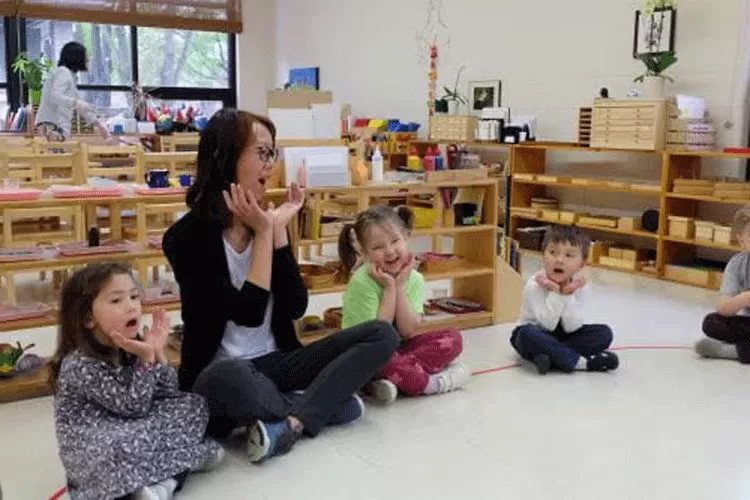
In a traditional educational setting, the teacher is often the focal point of the classroom—the “sage on the stage” who dispenses knowledge to a group of passive students. The Montessori classroom presents a starkly different picture. Here, the adult is rarely found at the front of the room addressing the entire class. Instead, they move quietly, observing one child, presenting a lesson to a small group, and connecting with individuals. This is because the role of a Montessori teacher, or “guide” as they are more aptly called, is fundamentally different. Their purpose is not to teach, but to facilitate learning by creating a link between the child and the carefully prepared environment.
The Designer of the Environment
The most crucial work of the Montessori guide happens before the children even arrive. The guide is the dynamic link to the environment and is responsible for designing and maintaining a classroom that is perfectly tailored to the developmental needs of the children within it. This is a meticulous and ongoing task. The guide ensures that the room is orderly, beautiful, and inviting. They carefully select and arrange the materials on low, accessible shelves, ensuring they are complete, clean, and in perfect condition. The materials are sequenced logically, from simple to complex, creating a clear path for learning. The guide constantly observes the children’s interactions with the environment and makes subtle adjustments—rotating materials, adding new challenges, or simplifying areas to meet the evolving needs of the community. The environment itself becomes a teacher, and the guide is its architect.
The Meticulous Observer
A primary function of the Montessori guide is to be a keen, scientific observer. They spend a significant part of their day watching the children work, taking objective notes on their progress, interests, and challenges. This is not passive supervision. It is an active, diagnostic process. Through observation, the guide determines when a child is ready for a new lesson, whether they have mastered a concept, or if they are in a “sensitive period” for a particular skill. They notice social dynamics, patterns of movement, and periods of deep concentration. These detailed observations are the foundation for all of their decisions, allowing them to follow the individual needs of each child rather than a predetermined curriculum schedule. This deep respect for the child’s unique developmental path is a hallmark of the Montessori approach.
The Master of the Presentation
While the guide does not lecture, they are an expert in giving lessons, or “presentations.” These presentations are models of brevity and precision, typically given to an individual child or a small group. The guide demonstrates the specific use of a material with minimal, deliberate movements and very few words. The goal is to spark the child’s interest and show them the possibilities within the material, not to explain the concept verbally. By keeping the presentation clear and concise, the guide leaves room for the child to explore and make their own discoveries. Once the lesson is given, the guide steps back, allowing the child to work with the material independently. The guide must know when to intervene and when to protect a child’s concentration, a delicate balance learned through rigorous training and observation.
The Protector of the Child’s Spirit
Ultimately, the Montessori guide is a role model and a protector of the child’s innate love of learning. They cultivate an atmosphere of respect, grace, and courtesy. They do not use rewards or punishments, as these external motivators can interfere with the child’s intrinsic drive to learn. Instead, they foster a calm, supportive community where children feel safe to take risks and make mistakes. The guide demonstrates patience, humility, and a deep faith in the child’s potential. By preparing the environment, observing carefully, and knowing when to step in and when to step back, the Montessori guide removes obstacles to learning and allows the child’s natural curiosity and intelligence to flourish.