
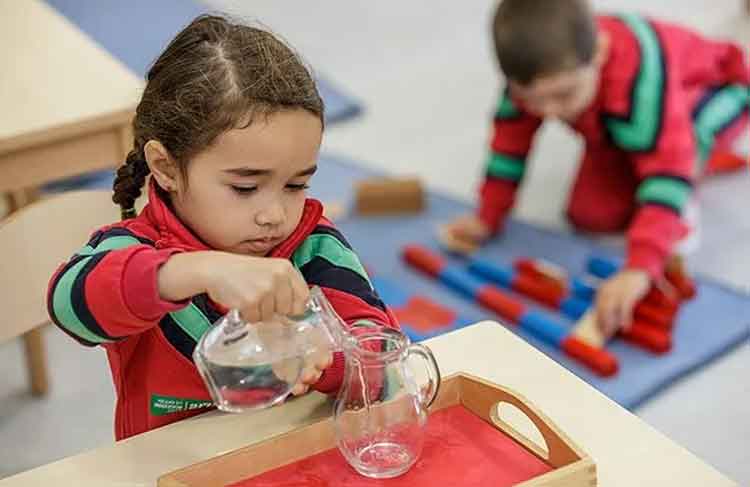
In the digital age, where information is abundant and easily accessible, the true measure of a successful education is not just what a person knows, but whether they have the ability and desire to continue learning. The Montessori philosophy, particularly through its use of meticulously designed materials, builds a foundation for this lifelong love of learning. Unlike rote memorization or the competitive atmosphere of traditional classrooms, the Montessori environment fosters intrinsic motivation by allowing children to engage with materials that are both challenging and deeply satisfying. This process transforms learning from a task to be completed into a joyous act of discovery.
The genius of Montessori materials lies in their ability to captivate a child’s attention and lead them into a state of deep concentration. A child working with the geometric cabinet, for example, is not just learning the names of shapes; they are developing their fine motor skills, refining their visual discrimination, and categorizing forms based on their properties. This multi-layered engagement keeps the child’s mind and body fully occupied. The quiet concentration of a child working with a material is what Dr. Montessori called “normalization.” This is the state where a child is fully absorbed in purposeful work, free from distraction and external pressure. When a child is allowed to work in this state, they not only master the material but also build a strong sense of inner peace and self-discipline. This experience is deeply rewarding and fuels their desire to seek out new challenges and continue the cycle of discovery.
Furthermore, the materials are structured to progress from the simple to the complex, building a logical bridge from the concrete to the abstract. A child who works with the Golden Beads to understand place value will later use that physical understanding to solve abstract mathematical problems. This gradual transition ensures that the child is never presented with a concept that is beyond their grasp. The materials are also interconnected, revealing a holistic curriculum. The Language materials, for example, build upon the Sensorial materials. The child who has learned to refine their touch with the stereognostic bag will later use that sensitivity to trace the Sandpaper Letters, connecting the feel of the letter with its sound. This interconnectedness shows the child that knowledge is not compartmentalized but is part of a larger, beautiful tapestry. By allowing the child to build their own knowledge from the ground up, the materials instill a deep sense of ownership and competence. They learn that they are capable of solving problems, making discoveries, and guiding their own learning journey. This internal drive, born from a positive and rewarding experience with the materials, is the most powerful catalyst for a lifelong love of learning.