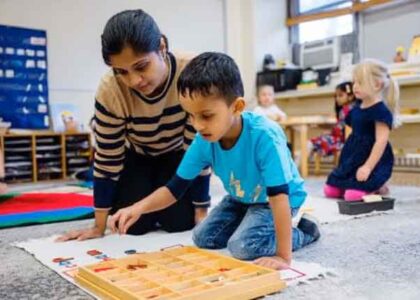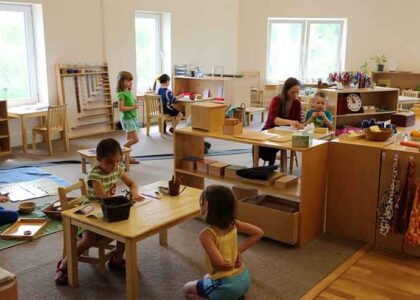
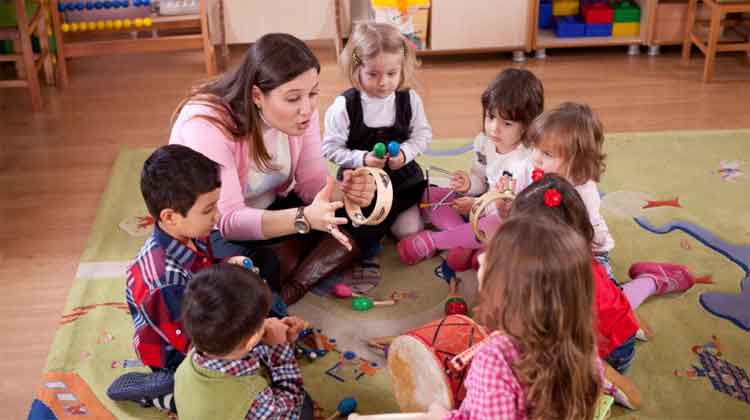
In the Montessori method, the educator’s role is not primarily that of an instructor, but a scientific observer. Dr. Montessori believed that the most effective way to guide a child is to first understand them, and the only way to truly understand a child is through careful, non-judgmental observation. This is a radical departure from traditional teaching, where the focus is often on delivering a pre-planned lesson. In a Montessori classroom, the educator’s most powerful tool is their ability to watch, listen, and learn from the children in their care. Observation is not a passive activity; it is a dynamic and purposeful process that informs every decision an educator makes, from what materials to present to how to intervene in a social conflict. It is a way of seeing the child not for who we want them to be, but for who they truly are—a unique individual on their own developmental journey. A skilled observer can see a child’s true interests, their moments of struggle, their triumphs, and their moments of deep concentration. This information is a map that guides the educator in creating a prepared environment that is truly responsive to the child’s needs. Without this foundational practice, the rest of the Montessori method would fall apart. Observation is the anchor that grounds the work in reality and ensures that the needs of the child are always at the center.
So, what does effective observation look like in practice? It begins with setting aside dedicated time each day to simply watch the children at work. This can be done from a quiet corner of the room, with a notebook in hand, or even just in a mental snapshot. The key is to be present and to observe without judgment. A Montessori educator might note which materials a child is drawn to, how long they stay with a particular work, and whether they are working with concentration. They might also observe the social dynamics of the classroom, noting which children are collaborating, which are struggling with a social conflict, and which are working independently. The goal is to gather objective data, not to form subjective opinions. Instead of thinking, “That child is not paying attention,” a good observer might note, “The child left the work after two minutes and moved to the sensory bin.” This objective data provides a starting point for reflection and planning. Once the observations are made, the educator reflects on them to determine the next steps. For example, if a child is repeatedly working with a particular material, the educator might see that as a sign that the child is ready for the next lesson in that sequence. If a child is struggling to choose a work, the educator might see that as a sign that the child needs a one-on-one lesson to re-engage them. This process of observation, reflection, and action is a continuous cycle that ensures the classroom is always in tune with the needs of the children. It is a process of scientific inquiry, where the educator is the researcher and the children are the subjects. It is a powerful way to make a teaching practice truly evidence-based and responsive to the needs of each unique child.
Observation as a Tool for Social-Emotional Development
Observation is not just for academic planning; it is also a powerful tool for supporting a child’s social-emotional development. By observing how children interact with one another, an educator can gain deep insights into their social needs and skills. For example, a teacher might observe a child who is struggling to join a group, or another who is having difficulty sharing a material. These observations provide a clear picture of where the child needs support. The educator can then provide targeted lessons on grace and courtesy, or they can model positive social interactions. The goal is not to solve the child’s problems for them, but to empower them with the skills they need to navigate social situations on their own. This requires a deep understanding of each child’s unique personality and temperament, which can only be gained through consistent observation. It is a way of seeing the “whole child,” not just their academic abilities. An educator who is a skilled observer can also use their observations to identify a child who is struggling emotionally. A sudden change in behavior, a withdrawal from social interaction, or an increase in frustration can all be signs that a child is in need of support. By noticing these subtle shifts, the educator can intervene with a gentle word, a calming presence, or a private conversation. This is a far more effective approach than waiting for a major crisis to occur. Observation is a form of proactive care, a way of being present and attuned to the emotional well-being of every child in the classroom. It is a testament to the idea that a truly effective education addresses the heart as well as the mind. It is a form of respect, a way of saying, “I see you, and I am here for you.”
The Link Between Observation and Documentation
To make observation a truly effective tool, it must be paired with documentation. A Montessori educator keeps detailed, ongoing records of each child’s work and progress. This can be done through a variety of methods, from a simple notebook to a digital app. The documentation includes notes on which lessons have been presented, which materials the child has mastered, and any notable observations about their work or behavior. This documentation serves several important purposes. First, it provides a clear picture of the child’s developmental trajectory, allowing the educator to see patterns and to plan for future lessons. It ensures that the child is always being presented with new challenges and is never bored or overwhelmed. Second, it serves as a powerful communication tool with parents. When a parent asks about their child’s progress, the educator can provide concrete examples of the work they are doing, the skills they are mastering, and the interests they are pursuing. This helps to build a strong home-school partnership and to ensure that parents are fully engaged in their child’s learning journey. Finally, documentation is a tool for the educator’s own professional growth. By regularly reviewing their notes, an educator can reflect on their practice, identify areas for improvement, and celebrate their own successes. It is a way of holding oneself accountable to the high standards of the Montessori method. Observation is the art, and documentation is the science. Together, they form the foundation of a truly responsive and child-centered teaching practice. They are the keys to unlocking the full potential of every child in the classroom. By making observation a central part of their daily practice, a Montessori educator ensures that their work is not just a job, but a profound and transformative journey with the child.