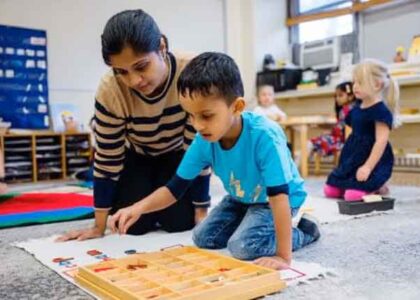

In many traditional classrooms, discipline is a system of external control. It often involves rewards for good behavior and punishments for bad behavior, designed to enforce a set of rules. In the Montessori method, the approach to discipline is fundamentally different. Dr. Montessori believed that true discipline is not something imposed from the outside, but something that develops from within. She called it “inner discipline,” and it is the result of a child’s natural drive for purposeful work and a sense of belonging in a community. A Montessori classroom is not without rules; it is a place of “freedom within limits.” The limits are clear and consistent, and they are designed to protect the safety of the children, the integrity of the materials, and the peace of the community. But within those limits, the child has a profound sense of freedom and autonomy. This freedom is what allows them to develop self-control and self-discipline. When a child is given the opportunity to choose their own work, to work at their own pace, and to achieve a sense of mastery, they become intrinsically motivated. They are not working for a reward or to avoid a punishment; they are working because the work itself is fulfilling. This is the foundation of inner discipline. The educator’s role is not to enforce rules with a heavy hand, but to be a patient guide who helps the child understand the purpose of the limits and to develop the skills necessary to navigate them independently. The Montessori method is a powerful testament to the idea that true discipline is not a result of external force, but of internal growth.
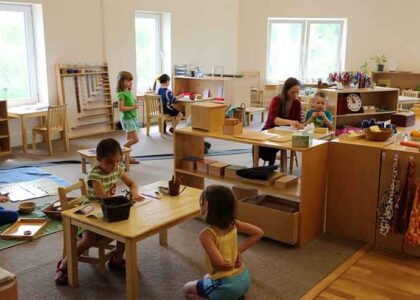
One of the key ways the Montessori method supports discipline is through the concept of the “prepared environment.” The environment itself is a powerful tool for guiding behavior. It is orderly, beautiful, and inviting, which naturally encourages children to be respectful and purposeful. When a child sees that the materials are cared for, they are more likely to care for them themselves. The materials also have a “control of error,” which means the child can self-correct their own mistakes. This is a form of natural consequence that is far more effective than an adult’s punishment. For example, if a child is stacking the pink tower incorrectly, the tower will fall over. The child learns from this natural consequence and tries again. There is no shame, no blame, and no external judgment. This process of trial and error, of learning from one’s own mistakes, is a powerful lesson in self-regulation and perseverance. The prepared environment also reduces the need for constant adult intervention. Because children are free to choose their own work and to move about the classroom, they are less likely to be bored or restless, which are often the root causes of misbehavior. The environment is a place of purposeful activity, where every child has a sense of belonging and a meaningful role to play. The educator’s role is to ensure that the environment is always meeting the child’s needs, and to gently guide them back to a purposeful activity if they become lost or distracted. This is a far more effective approach than simply punishing a child for misbehaving. It addresses the root cause of the behavior, rather than just the symptom.
The Role of Grace and Courtesy Lessons
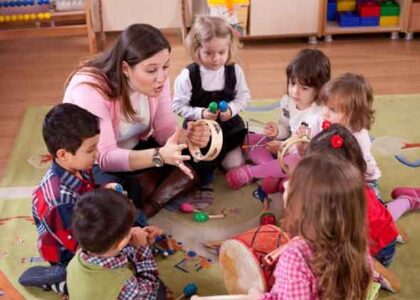
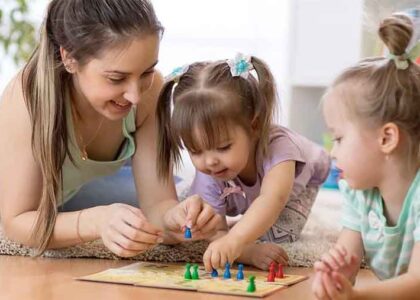
While the prepared environment provides a foundation for discipline, the Montessori method also provides explicit lessons in social and emotional skills. These are known as “grace and courtesy” lessons, and they are taught with the same care and precision as any other Montessori material. A lesson on how to interrupt politely, how to ask for help, or how to wait for a turn is presented in a clear and concise way. The children practice these skills through role-playing and repetition, until they become a natural part of their behavior. This is in stark contrast to traditional classrooms, where social skills are often assumed or left to chance. The Montessori method recognizes that these are not innate skills; they are learned behaviors that must be taught and practiced. These lessons are not just about manners; they are about teaching a child how to function harmoniously within a community. They learn that their actions have an impact on others, and that true freedom is not about doing whatever you want, but about being respectful and considerate of those around you. When a conflict arises in the classroom, the educator’s role is not to be a judge, but a facilitator. They might guide the children to a “peace table” and help them use “I feel” statements to express their needs and find a solution together. This process teaches children how to resolve their own conflicts, which is a powerful lesson in self-regulation and problem-solving. The educator is a model of grace and courtesy, demonstrating respectful and kind behavior in all their interactions. This modeling is a powerful form of discipline, as children learn more from what they see than from what they are told.
From External Control to Internal Motivation
Ultimately, the Montessori method’s approach to discipline is about moving from external control to internal motivation. It is about helping a child develop a sense of self-discipline that will serve them for a lifetime. This is a far more powerful and lasting form of discipline than any reward or punishment could ever be. A child who is motivated from within to do their best work, to be respectful of others, and to contribute to their community is a child who is truly disciplined. The Montessori educator’s role is to be the guardian of this process, to create an environment where the child’s inner discipline can unfold naturally. This requires immense patience, a profound trust in the child, and a deep understanding of their developmental needs. It is a testament to the idea that a child who is given freedom and responsibility will rise to the occasion. The Montessori method is not a system of rules; it is a system of principles. And those principles, when applied with care and respect, lead to a classroom where discipline is not a problem to be solved, but a natural and beautiful outcome of a child’s purposeful work and a harmonious community. It is a powerful model for creating not just well-behaved children, but confident, capable, and self-disciplined human beings. The greatest gift a Montessori educator can give a child is not obedience, but the freedom to become their own guide.