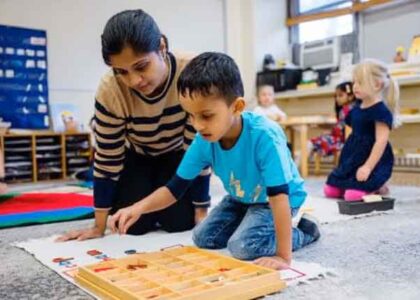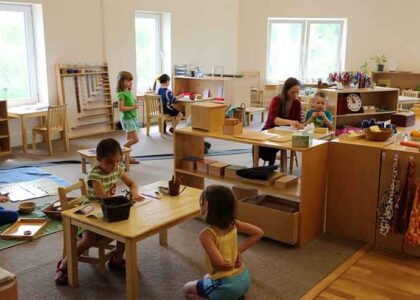

Dr. Maria Montessori identified what she called “sensitive periods,” which are specific, temporary windows of opportunity in a child’s development when they have an intense, almost obsessive interest in a particular skill or area of knowledge. These are times when a child’s mind is uniquely receptive to learning a specific concept, be it language, order, or the refinement of the senses. The beauty of Montessori education lies in its ability to recognize and capitalize on these sensitive periods by providing the right materials at the right time. The materials are not just tools; they are keys that unlock a child’s potential during these crucial developmental phases.
For example, the sensitive period for language typically occurs between birth and age six. During this time, a child’s mind is a sponge, absorbing vocabulary and grammatical structures from their environment. The Montessori materials support this innate drive with a rich and structured curriculum. A child will start with simple, tactile materials like the Sandpaper Letters, which connect the muscular sense with the sound and shape of a letter. From there, they progress to the Movable Alphabet, allowing them to form words before they have the fine motor skills to write. This progression, from sound to symbol to word, is designed to meet the child’s readiness at each stage, transforming a complex process into a joyful, self-directed activity. The materials don’t force learning; they provide the means for the child to teach themselves.
The prepared environment also caters to the sensitive period for order, which is particularly strong in the young child. Children in a Montessori classroom are drawn to order and routine. They are given a specific place for each material and are taught to return it to its place after use. This seemingly simple act is a fundamental exercise in self-discipline and provides a sense of security and control in their environment. The materials themselves are also ordered logically, from simple to complex, which appeals to a child’s desire to classify and organize information. This early experience with order and classification lays a strong foundation for future learning, particularly in subjects like mathematics and science. The materials, therefore, are a carefully curated set of tools that align with a child’s natural developmental timetable. They are a bridge between the child’s inner world of sensitive periods and the external world of knowledge, allowing the child to build their own mind and intellect with the natural joy and ease of a master builder at work.