The Guide’s Most Powerful Tool
For parents considering a Montessori education, the first step is often an invitation to observe a classroom in action. Similarly, for a Montessori teacher-in-training, learning how to observe is the most fundamental skill they will acquire. But what exactly is happening during this quiet, focused watching? It’s far more than simple supervision. Scientific observation is the engine that drives a Montessori classroom. It is a dynamic process of gathering information that allows the guide to understand each child’s unique developmental needs and to prepare an environment that perfectly supports them. It is the guide’s most essential tool for “following the child.”
The Practice of Objectivity
The first rule of Montessori observation is objectivity. The goal is to see what is actually happening, not what we think is happening or what we want to be happening. Trainees and guides learn to record only the facts, free from interpretation or judgment. Instead of writing, “Leo was angry and frustrated with the puzzle,” an objective observation would state, “Leo pushed the puzzle piece forcefully. His eyebrows were lowered. He sighed loudly and pushed the puzzle away.” This seemingly small distinction is critical. By stripping away our adult interpretations, we open ourselves up to seeing the child’s true experience. Perhaps Leo was not angry, but simply concentrating intensely. Perhaps the work was too challenging, or perhaps it was too easy and he was bored. Objective facts provide a clear picture that can be analyzed later to inform the guide’s next steps.
What Is the Guide Looking For?
A trained Montessori guide observes with a specific purpose, looking for clues about a child’s development. They are not looking for flaws or grading performance. Instead, they are watching for signs of growth and readiness. Key areas of observation include:
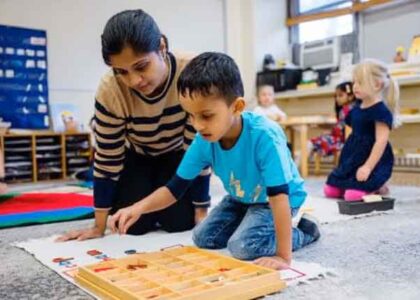
- Use of Materials: How does the child approach the work? Do they use the material as it was presented? Do they repeat the activity? Have they mastered it, or are they still discovering its purpose? This helps the guide know when to introduce a new challenge or re-present a lesson.
- Concentration: Is the child able to focus deeply on a task? How long do these periods of concentration last? What kinds of activities engage them the most? Observing this “great work” is a primary goal, as it indicates that the child’s developmental needs are being met.
- Movement: Is the child’s movement purposeful and controlled? Do they navigate the classroom environment with awareness? Observing a child’s physical development can indicate a need for more gross motor activities or refinement of fine motor skills.
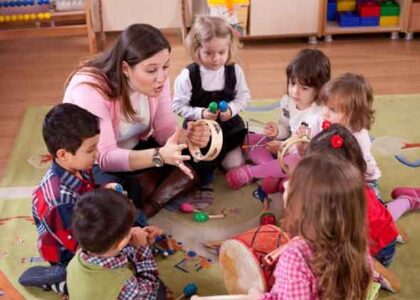
- Social Interactions: How does the child interact with their peers? Do they work alone or in groups? Do they ask for help or offer it to others? This provides insight into their social and emotional development and helps the guide foster a respectful community.
Observation Informs the Environment
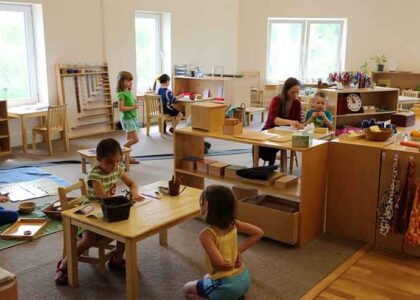
The data gathered during observation is not filed away and forgotten. It is the basis for every decision the guide makes. If observations reveal that several children are fascinated with pouring, the guide might add more pouring activities to the Practical Life shelves with varying levels of difficulty. If a child seems to be struggling with social interactions, the guide might make a point of presenting a “grace and courtesy” lesson on how to politely join a friend’s work. If a material is consistently being misused, it might mean the initial presentation was unclear, or perhaps the children are not yet developmentally ready for it. The classroom is a living, breathing space that evolves in direct response to the children’s observed needs. The guide uses their observations to remove obstacles to learning and to ensure the environment is always engaging and challenging.
A Shift in Perspective
Learning to be a scientific observer is a transformative experience for the adult. It requires patience, humility, and a deep trust in the child’s innate ability to direct their own development. It shifts the adult’s role from an active director to a responsive facilitator. The guide learns to wait, to watch, and to wonder. This respectful, individualized approach is what makes the Montessori method so profoundly effective. It ensures that each child is seen, understood, and supported on their unique journey, allowing them to construct themselves and realize their full potential.