Introduction: culture over rules
Patience emerges from culture more than from a single rule. A patient classroom culture is a web of interlocking practices: predictable routines, explicit social scripts, material design, teacher modeling, and community norms. Building such a culture requires intentional action across physical, temporal, and interpersonal domains. This post outlines practical strategies schools and teachers can adopt to cultivate patient, resilient classroom communities.
Start with shared norms and language
Establish a small set of clear, visible norms—phrases and expectations that everyone uses. Examples include: “One tray at a time,” “We return what we borrow,” and “We use quiet footsteps.” Teach short polite scripts for everyday interactions: “May I have a turn?” and “I’m working now.” Rehearse these scripts with children until they become automatic. Shared language reduces friction and gives children tools to negotiate social moments patiently.
Create predictable daily rhythms
Consistency supports patience. A daily pattern—arrival, work cycle, snack, outdoor play, closing—creates expectations that children internalize. Long uninterrupted work cycles (ideally 60–90 minutes for mixed-age primary settings) are particularly important: they allow deep concentration to develop. When children know the flow of the day, they can plan their work and manage impulses, reducing adult intervention.
Design materials and routines for autonomy
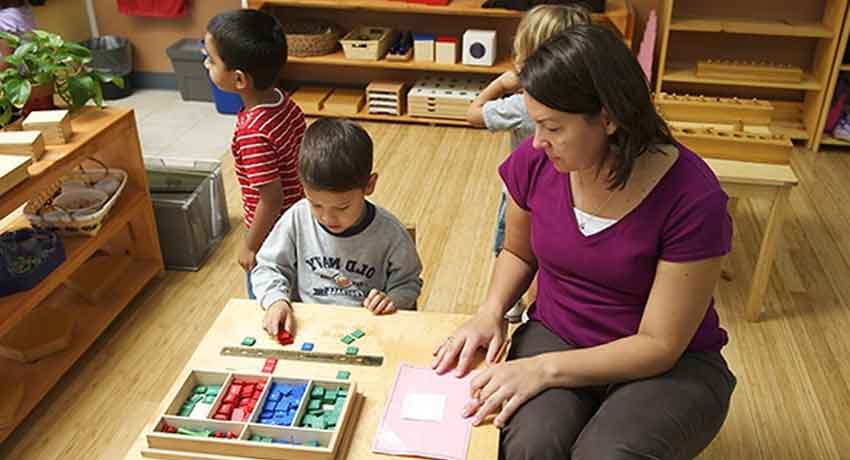
Materials and routines that facilitate independence reduce the need for adults to rush or rescue. Use trays that children can carry, low shelves for self-access, and tools sized for small hands. Teach routines for carrying, setting up, and returning materials. When children can complete full work cycles independently, teachers are freed to observe and to intervene with patience when necessary.
Teach and practice conflict resolution scripts
Modeling and rehearsing short conflict-resolution phrases empower children to handle disagreements without escalating. Scripts such as “I saw you were using that” followed by “Let’s ask to share” or “Can we take turns?” give children language and structure. Role-play common scenarios during group time so children practice patient negotiation, and use restorative moments to guide repair rather than punishment.
Leverage mixed-age classrooms
Mixed-age groupings naturally support patient cultures. Older children model calmer working habits and can mentor younger ones, which creates leadership and slows the classroom tempo. Mentor pairings help distribute responsibility and reduce the number of urgent calls on the teacher’s time, fostering an environment where patience is reinforced peer-to-peer.
Build a family partnership around patience
Communicate with families about the value of patience and consistent routines. Short parent workshops or newsletters explaining the rationale behind long work periods, material presentation, and observation can align expectations. When families understand and support classroom rhythms, children receive consistent signals across contexts, strengthening patient habits.
Institutional supports and teacher collaboration
Administrations can support patient cultures by protecting long work blocks in the schedule, limiting high-frequency interruptions like assemblies during core work times, and providing planning time for teachers to prepare materials. Regular teacher collaboration—peer observations and reflective meetings—helps sustain a shared stance of patience and provides mutual support for difficult moments.
Conclusion: culture as the soil for patience
Patient classroom cultures are not accidental; they are intentionally planted and tended. Through shared norms, predictable rhythms, design for autonomy, conflict-resolution scripts, mixed-age mentorship, family partnerships, and institutional support, patience becomes embedded in daily life. The result is a classroom where children can slow down, focus, and engage deeply in meaningful work.